iii.
Katha Kavana
The long version of the page the homepage teased. Four short chapters, and one honest gap where a fifth would normally go.
Chapter one — Origin
A story, and a poem
Katha ಕಥಾ
a story, a telling
Kavana ಕವನ
a poem, in Kannada
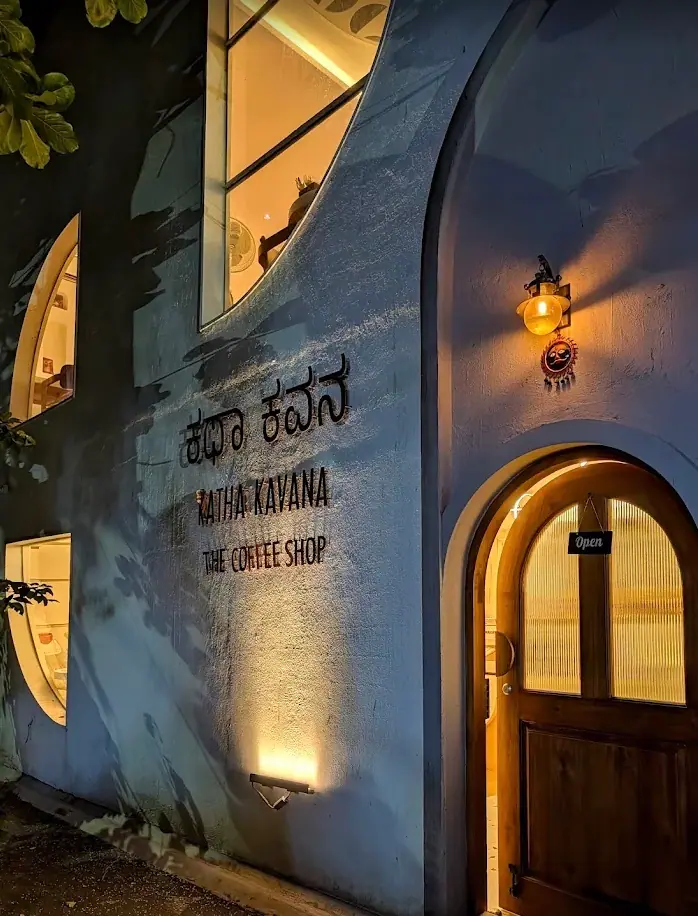
Katha travels: it is a story or a telling in Sanskrit, and it carries into Kannada, Hindi and Marathi more or less intact. Kavana is Kannada for a poem. Put together above a doorway in HSR Layout, they read as an invitation rather than a name.
The facade carries both scripts — ಕಥಾ ಕವನ above the roman letters, and under them the words the coffee shop. Inside, the house sign is a tree hung with books and a reader sitting beneath it.
We should be straight with you about one thing: no source anywhere records why the founders picked the name, or when this cafe opened. The reading above is the language’s, not theirs.
Chapter two — Philosophy
What the kitchen will not do
Read all three printed cards end to end and something is missing: there is no meat and no fish anywhere on them. Not a section, not a single line. That is a decision, and it is the clearest statement of intent this cafe makes in public.
Nothing on the card contains meat or fish. Egg does appear — in the omelettes, the french toasts, the pancakes, the ramen with egg and one of the salads. We would rather write that sentence out than print a green badge that says something stronger than the card supports.
The rest of the philosophy is legible in what gets made rather than in anything anyone has written down. Five pour-over methods at a counter this size — chemex, kalita, aeropress, french press, syphon — is not a commercial decision. It is somebody wanting to show you the difference.
Chapter three — The Space
Arches, terrazzo, and a wall of book covers
Everything in this chapter is something you can see in a photograph on this site, which is the only kind of claim about a room we are willing to make.
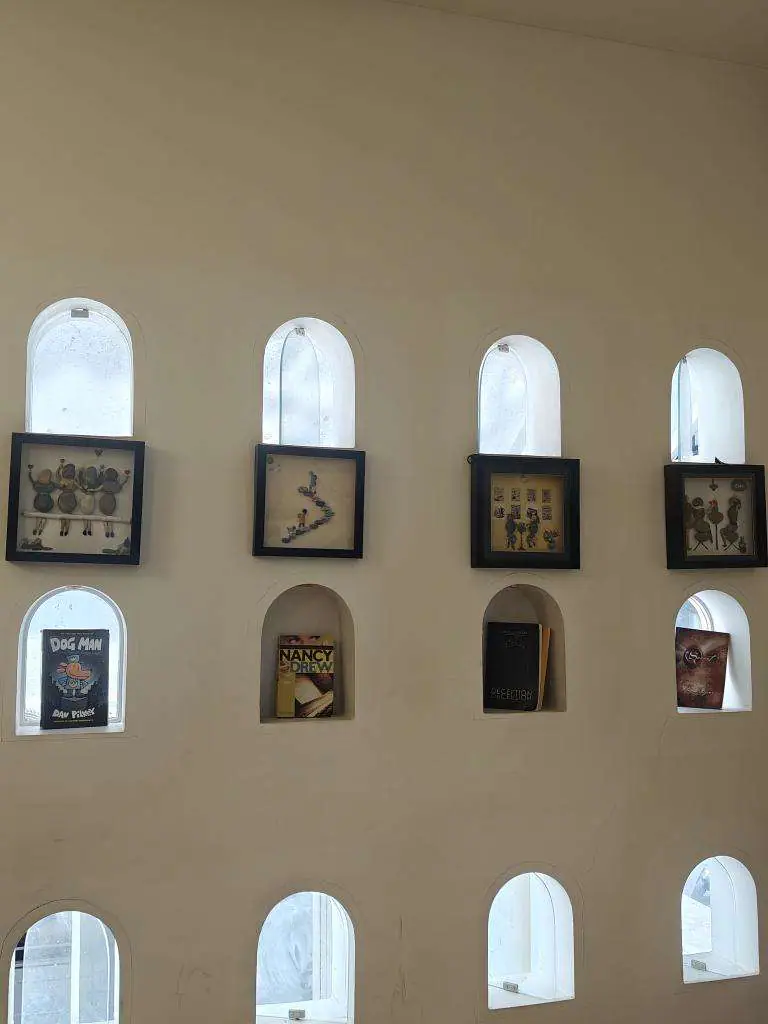
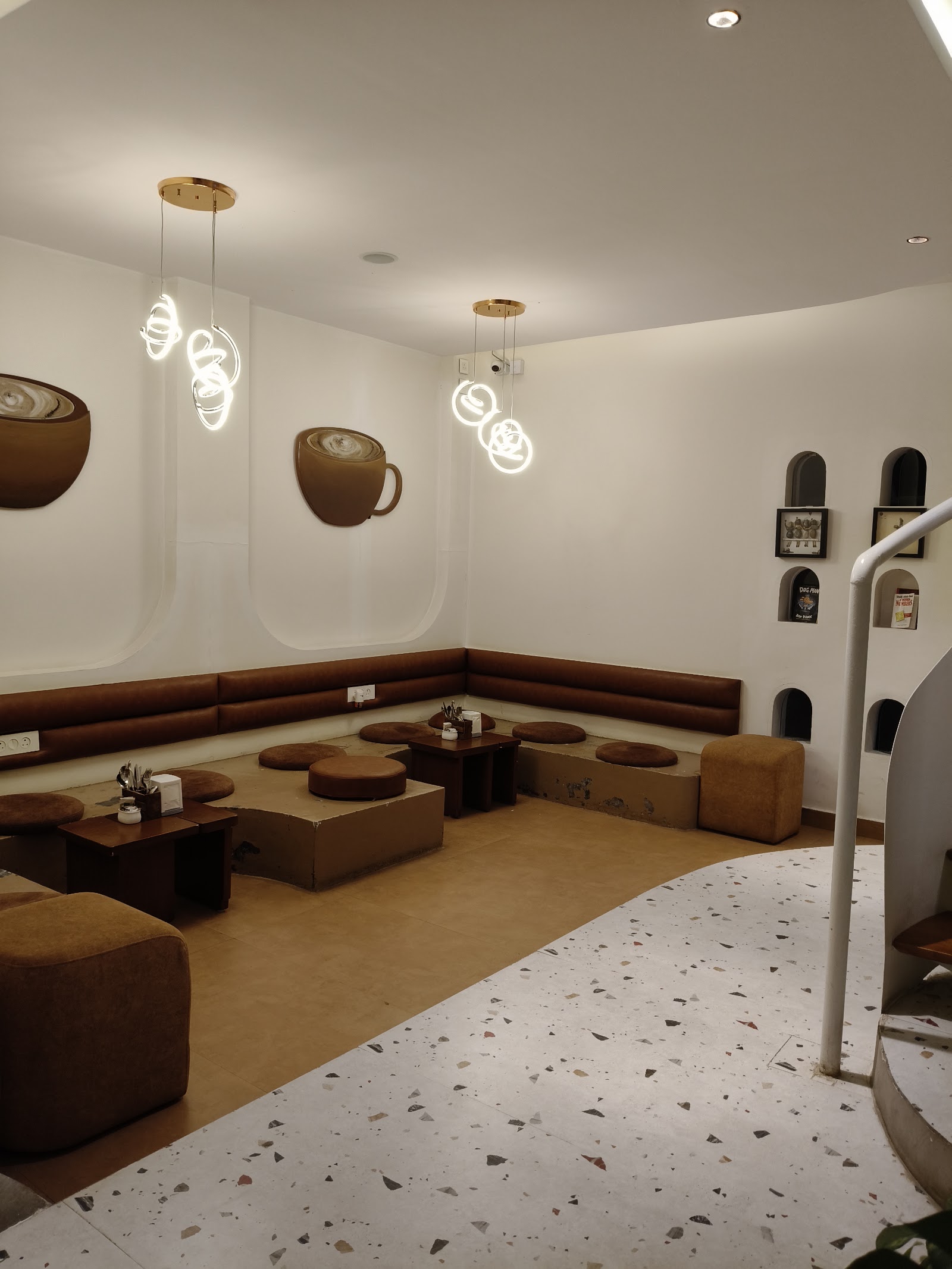
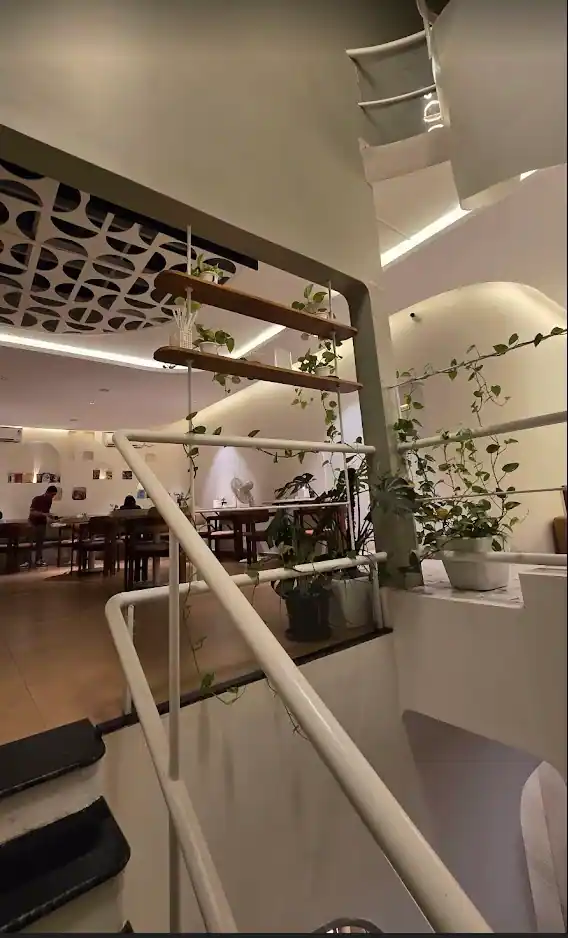
White plaster cut into rounded arches. Terrazzo underfoot. A perforated lattice panel let into the ceiling above the stair, which throws a pattern down onto the tables when the sun is right. A sculpted white staircase to a mezzanine with a railing and trailing plants. Low poufs and a long banquette in one corner for people who intend to stay. And along one wall, a grid of arched niches, each holding a single small framed book cover.
Chapter four — The People
The chapter we cannot write yet
Here is where a founder’s note belongs, and here is why there is not one: no source we could find names the owner, the founder or anyone behind the counter. Not the Google listing, not magicpin, not district.in. We are not going to invent a person.
What is on record is smaller and true. Somebody is behind that counter every day from nine in the morning until ten at night, seven days a week, pulling shots and running five pour-over methods. Somebody chose to hang other people’s books on the wall.
— and when they tell us the rest, this is the page it goes on.